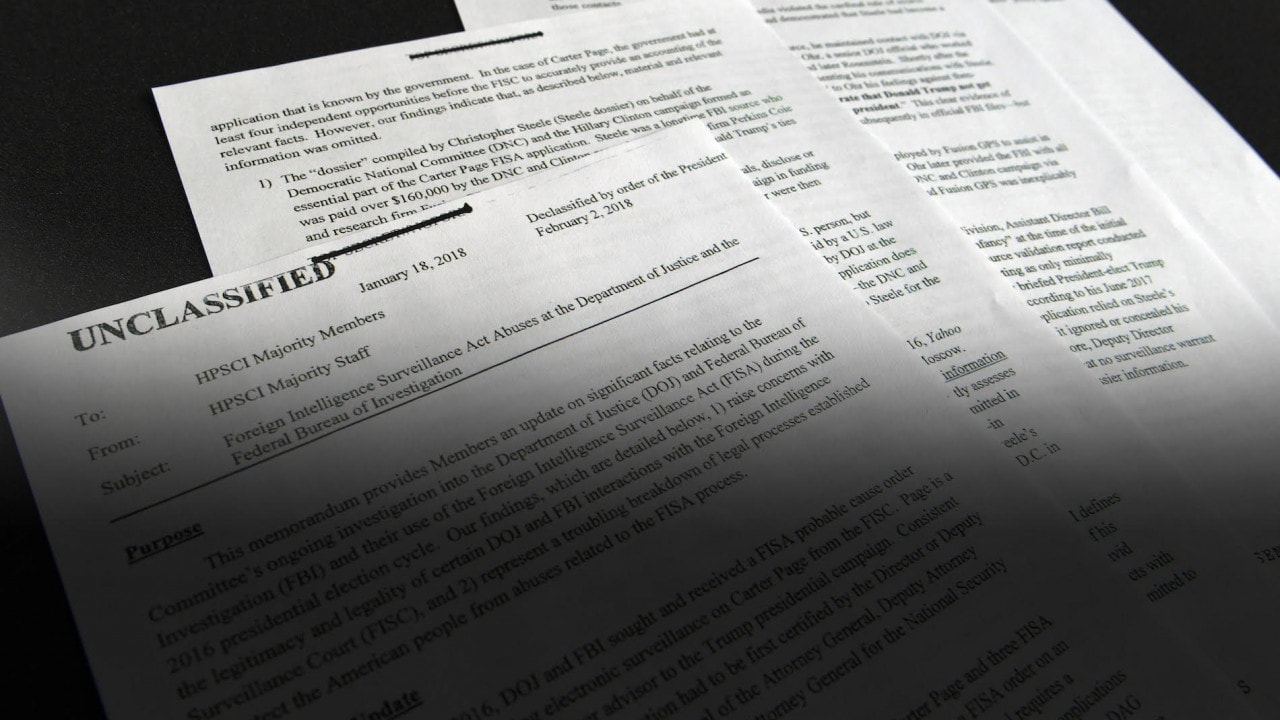
 AP Images Justice is blind, but it’s also human. So when there’s data that says Lady Justice might be peeking from under her blindfold, it’s important for the American people to know about it. The coverage of the House Intelligence Committee’s memo provides critical information in this regard, but the coverage itself isn’t blind or balanced — it’s biased. What’s more, the data the coverage is based on is, as of Sunday, incomplete. All of the articles we analyzed were highly slanted, yet the biases were different. (By “slant” we mean the outlets disproportionately favored data that points to a particular point of view.) CNN and The New York Timesdownplayed the importance of the memo, whose release was led by Rep. Devin Nunes. For instance, the Times wrote: The memo alarmed national security officials and outraged Democrats, who accused the Republicans of misrepresenting sensitive government information through omissions and inaccuracies … But [the release of the memo] fell well short of making the case promised by some Republicans: that the evidence it contained would cast doubt on the origins of the Russia investigation and possibly undermine the inquiry, which has been taken over by a special counsel, Robert S. Mueller III. The Page warrant is just one aspect of the broader investigation.It’s true that the warrants are one aspect of the investigation (we’ll get to the “Republicans’ case” in a moment). However, the juxtaposition here — between “The memo alarmed national security officials and outraged Democrats” and “But [the memo] fell well short of making [the Republicans’ case]” — suggests the committee’s disclosure was of little or no significance. However, the memo alleges that the FBI and the DOJ knowingly sought a warrant on politically biased evidence; if that’s accurate, it’s significant and important to expose. (Click here for more details on the memo.) On the other side of the bias were Breitbart and National Review. They overemphasized the notion that the information the memo revealed somehow invalidates the entire Russia investigation. Breitbart, in particular, suggested Democrats and the agencies fabricated the investigation to prevent then-candidate Trump from winning the election. Here’s an example: Perhaps the [memo’s] most important revelation … is that this was all an effort by paid supporters of [Hillary] Clinton’s campaign and the Democratic National Committee to abuse the powers of the federal government to prevent a candidate they disliked, now President Donald Trump, from winning a presidential election … the highest levels of the Justice Department including the man currently responsible for overseeing Special Counsel Robert Mueller’s investigation — Rod Rosenstein — are personally conflicted in this matter.While the allegations in the Republicans’ memo are serious, they don’t necessarily invalidate Mueller’s investigation — so little about it is known, and the Page warrant is only one aspect; who knows how many more there are. More importantly, Nunes’ memo is only one part of the warrant story — we’re only looking at a third or fourth of the picture! Here’s a visual representation of what we do and don’t know about the warrants. 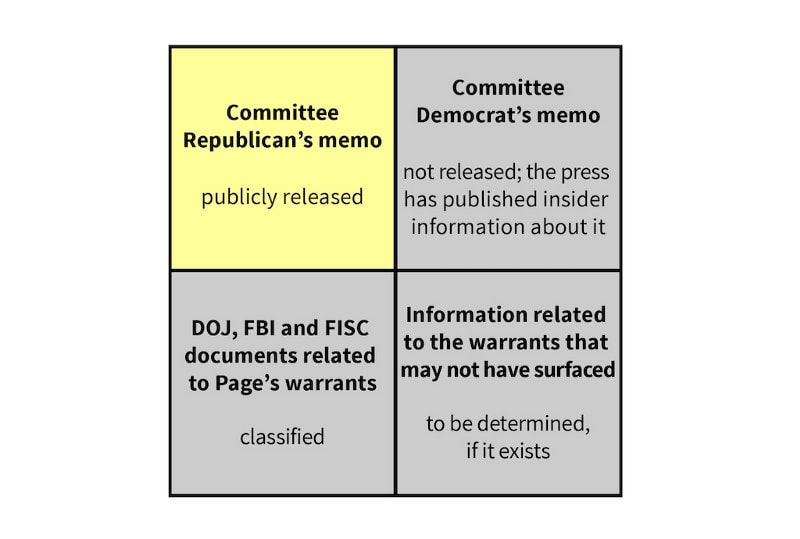 Given the missing information, isn’t it a little early to jump to conclusions? A scientist would wait to have all the data (or as much as possible) before considering conclusions. The media isn’t doing this. Much of the media coverage of the memo was hard to follow. While the story in and of itself is multifaceted, the slant and spin made it harder to figure out what the memo said and what’s going on (and our ratings reflect this). In addition to the bias and premature conclusions, the opinion in the articles we analyzed was often stated as fact. Our Raw Data brings the facts without all the added subjectivity. That difference alone signals the need for a change in the media: a move towards data-based reporting. Comments are closed.
|
Jens Erik GouldJens is a political, business and entertainment writer and editor who has reported from a dozen countries for media outlets including The New York Times, National Public Radio and Bloomberg News Archives
February 2018
Categories
All
|
 RSS Feed